We turn forests and land into the assets of the future.
Earn passive income from your property through carbon credits. We take care of everything.

Our solutions
Turn your property into an asset of the future
🌲
Do you own a forest?
Get more out of it.
Expected passive income
200 – 600 €
/ hectare per year
How it works:
1
Analysis and design: We assess your forest's potential and design a carbon project.
2
Certification: We arrange certification under the Verra and Gold Standard schemes.
3
Credit sales: We sell the credits on the global market through our trading channels.
🌱
Do you own land?
We'll turn it into a source of income.
Expected yield once established
400 – 800 €
/ hectare per year
Turnkey project delivery:
1
Design and planting: We create a planting plan and carry it out with experts and local communities.
2
AI monitoring: We track progress with our DIGITECHFOREST tool.
3
Certification and monetisation: We handle verification and the sale of credits.
How does it work?
Site analysis
We assess the soil, climate, species composition and carbon sequestration potential.
1
Project design
We create a planting plan optimised for CO₂ sequestration and resilience.
2
Planting and monitoring
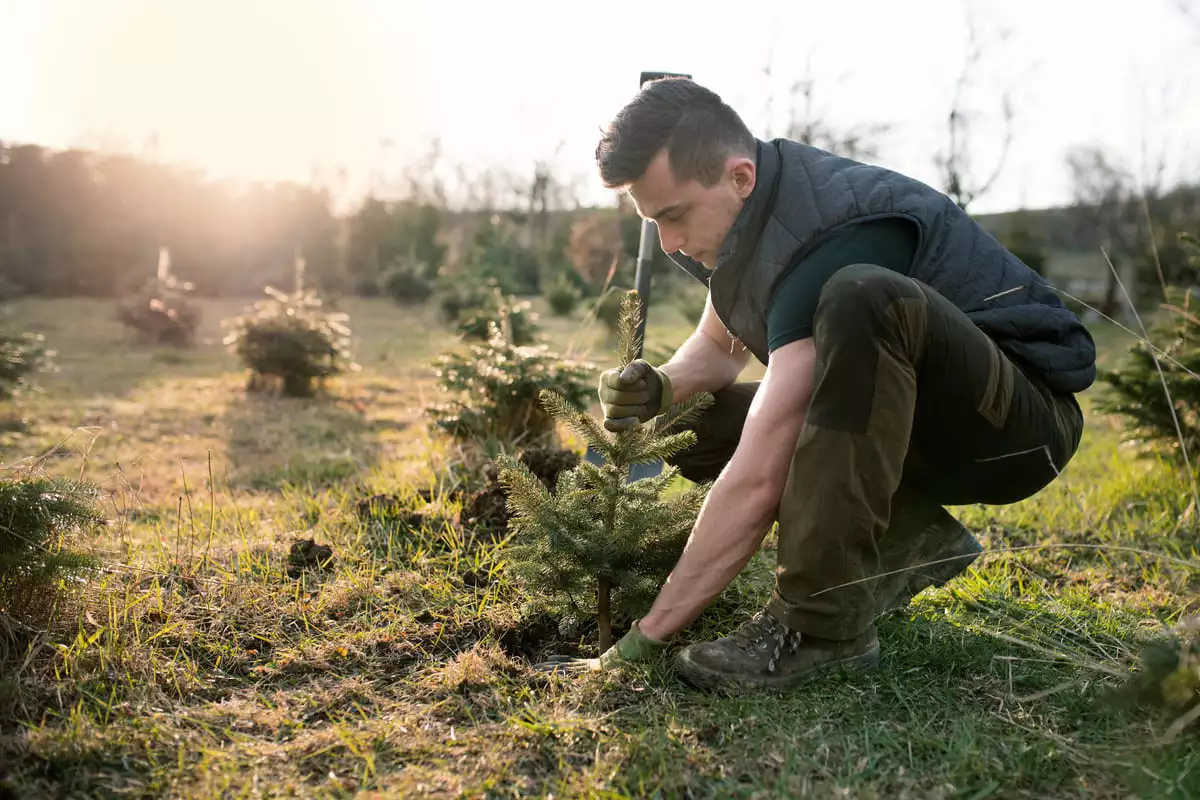
Planting is carried out by our expert teams or local communities.
3
AI supervision
We monitor the growth of the stands with our DIGITECHFOREST tool, which models carbon flows and returns.
4
Certification and sales
We verify the credits against the strictest international standards and sell them through our trading channels.
5
Calculate your carbon footprint estimate
Find out how much CO2 your company produces.
Become a carbon neutral company!
FAQ
Frequently Asked Questions
What is a carbon footprint?
The carbon footprint is the amount of carbon dioxide that our activities release into the atmosphere. Each of us has a carbon footprint of a different amount and this is affected by the amount and type of our activities.
How is carbon footprint calculated?
The carbon footprint is calculated based on the inputs to activities that produce carbon dioxide. These are activities that require the combustion of fossil fuels. The calculation itself consists of identifying such activities, measuring the activities and converting them to Co2 equivalent.
What constitutes the planting process?
Before we start planting, it is very important to choose the right planting space. We focus on places where we can predict with certainty the beneficial impact on the environment. This is followed by the selection of suitable planting material and finally planting, which is carried out by professionally trained staff to ensure that the seedlings take as long as possible.
What is offsetting?
Offsetting is the compensation of the carbon footprint. In practice, it means reducing the carbon footprint that has already been produced by offsetting it with measures that ensure we store or retain the same amount of carbon in the atmosphere.
What are the benefits of a carbon neutral company?
In recent years, consumers pay increased attention to product sustainability and this is a growing trend. Today, sustainability is the main subject and the carbon credits market currently worth 1,7 trillion USD is predicted to grow 25x its current value by 2050. Contrary to the misconseption that sustainability comes at a financial cost, it can actually drive economic growth and profitability. Companies that advocate sustainable solutions are often prefered to other less ecological alternatives.